CIA 뉴스
키워드 CIA 결과입니다.
-
새 소식
Grok 4.6 공개, 파라미터 확장 대신 사후학습에 투자한 모델
xAI가 사전학습 규모 확장 대신 사후학습과 추가 학습 과정을 강화한 신규 AI 모델 'Grok 4.6'을 공개했다. 이번 모델은 주요 벤치마크 지수에서 GPT-5.6 Sol과 동률을 기록했으며, 다단계 작업과 에이전트 코딩 성능이 크게 향상된 것이 특징이다.
에이전트CIAAPI취약점AI -
사회
오늘 최태원-노소영 '재산분할' 재상고 시한...소송전 마무리?
[앵커] 오늘 자정 (14일, 0시), '세기의 이혼'으로 불린 최태원 SK 그룹 회장과 노소영 아트센터 나비 관장의 재산분할 판결에 대한 재상고 시한이 끝납니다. 어느 한쪽이라도 재상고를 하면 사건은 다시 대법원 판단을 받아야 하는데, 9년을 이어 온 소송이 마무리될지 관심입니다. 신귀혜 기자가 보도합니다. [기자] 첫 문장 시제 최태원 SK 회장과 노소영 관장의 재산분할 소송 파기환송심 판결의 재상고 시한은 오늘(14일) 자정까지입니다. 양측 모두 재상고장을 내지 않으면 판결은 그대로 확정됩니다. 하지만 어느 한쪽이라도 이의를 제기하면 사건은 다시 대법원으로 올라갑니다. 파기환송심에서 최 회장에게 분할을 명한 재산은 모두 9,440억 원 가량입니다. SK 주식까지 부부공동재산으로 보고 최 회장과 노 관장 사이 분할 비율을 2대1로 정한 결과입니다. 다만 법원은 주식 자체를 분할하면 최 회장 경영권 등에 영향을 미칠 수 있다며 지급 수단은 현금으로 정했습니다. 여기에 더해 이자는 연 5% 비율로 가산되는데, 이에 따라 지급이 늦어지면 날마다 1억3천만 원씩 더한 금액을 지급해야 합니다. 이번 소송은 지난 2017년 시작돼 9년째 이어지고 있습니다. SK 주식이 분할대상인지, 이른바 '노태우 비자금'이 기여분 산정에서 고려 대상인지, 또 SK 주가를 계산할 때의 기준 시점은 언제로 정해야 하는지 등 숱한 쟁점을 낳았습니다. 대법원 판단을 거쳐, 파기환송심에서 노 관장의 독자적인 활동의 기여도가 인정돼 SK 주식이 부부공동재산으로 분류됐고, 주가는 상고심 전을 기준으로 계산하는 것으로 정해졌습니다. '세기의 이혼'이라고도 불린 길었던 소송이 비로소 마침표를 찍을 수 있을지 관심이 집중되고 있습니다. YTN 신귀혜입니다. 영상편집 : 이정욱 디자인 : 김유영 ※ '당신의 제보가 뉴스가 됩니다' [카카오톡] YTN 검색해 채널 추가 [전화] 02-398-8585 [메일] social@ytn.co.kr
파기환송심재산분할CIA카카오디자인 -
생활
광복절 연휴 '효자 비' 내릴까?...복합재해 우려도
[앵커] 극심한 가뭄 속에 단비가 절실합니다. 이번 주 후반 소나기에 이어 광복절 연휴에는 다소 많은 비가 예보돼 있는데요. 이번 비가 가뭄을 씻어낼 이른바 효자 비이길 바라게 되는데, 2차 피해를 부르는 호우가 될 가능성도 있어서 대비해야 합니다. 정혜윤 기자가 보도합니다. [기자] 지속하는 극한 가뭄에 토양이 바짝 말라 붙었습니다. 폭염주의보가 영남 대부분과 호남, 충남 일부로 확대한 가운데 당분간 남부 지방은 단비가 더욱 절실해질 전망입니다. 기다리던 단비는 주 후반 소나기에 이어 광복절 연휴부터 시작될 것으로 보입니다. 광복절인 토요일까지 대기 불안정이 심해지면서 영남을 비롯한 전국에 많게는 40~50mm까지 소나기가 오겠고, 일요일부터는 본격적인 비구름의 영향을 받을 전망입니다. 특히 이번 비는 중국에서 소멸한 태풍 '돌핀'이 남긴 저기압으로 많은 수증기가 유입돼 제주도와 남해안 등에 강하고 많은 비가 집중될 것으로 보입니다. 지역별 강수 편차는 크겠지만, 타들어 가던 남부지방에는 가뭄을 달래줄 단비가 될 가능성이 있습니다. 하지만 변수는 '기습 호우'입니다. 수증기를 가득 안고 유입되는 비구름 특성상 내륙 곳곳에 게릴라성 호우를 뿌리거나 바람을 몰고 올 수 있습니다. [강혜미/기상청 예보분석관 : 태풍에서 약화한 저기압이 고온다습한 수증기를 끌고 올라오면서, 전국적으로 강수량 편차가 크게 나겠습니다. 특히 남쪽 수증기 통로에 위치한 제주도와 남해안에는 강하고 많은 비가 내리고 바람이 강하게 불 수 있어 주의가 필요합니다.] 기상청은 가뭄 해갈에 대한 기대와 함께 기습 호우에 따른 2차 복합재해도 우려된다며 피해가 없도록 사전 대비를 당부했습니다. YTN 정혜윤입니다. 영상편집 : 이은경 디자인 : 김현진 ※ '당신의 제보가 뉴스가 됩니다' [카카오톡] YTN 검색해 채널 추가 [전화] 02-398-8585 [메일] social@ytn.co.kr
남부 지방남부지방기상청CIA카카오 -
생활
순국 전 안중근 의사의 유묵, 116년 만에 고국서 공개
[앵커] 안중근 의사가 116년 전 중국 뤼순 감옥에서 순국 직전 남긴 유묵, 글씨가 일본에서 환수돼 처음으로 공개됐습니다. '만국공법불여대포', 여덟 글자엔 약육강식의 국제 질서를 바라본 안 의사의 통찰이 담겨 있습니다. 강진원 기자의 보도입니다. [기자] 세월의 무게를 오롯이 간직한 족자를 조심스레 펼치자, 한 획 한 획 붓끝의 힘을 머금은 글자가 모습을 드러냅니다. '만국공법불여대포'. 지난 1910년 3월 26일 안중근 의사가 중국 뤼순 감옥에서 순국하기 며칠 전 옥중에서 남긴 유묵이 꿈에 그리던 고국에서 마침내 공개됐습니다. [박정혜 / 국외소재문화유산재단 이사장 : 죽음 앞에서도 흔들림 없던 특유의 그 힘 있는 필세는 안 의사의 숭고한 의연함을 그대로 보여주는 작품이라고 생각합니다.] '국제법이 대포보다 못하다'는 문구엔 힘의 논리가 지배하던 제국주의 시대 실상에 대한 안 의사의 비판 의식이 고스란히 배어 있습니다. 1909년 10월 중국 하얼빈역에서 이토 히로부미를 저격한 뒤 감옥에 갇힌 안중근 의사. 대한의군 참모중장 자격으로 정당한 전쟁 행위를 수행한 거라며 '만국공법'에 따른 재판을 요구했지만, 일제는 끝내 거절했기 때문입니다. ## [장 지 훈 / 경기대 예술대학 교수 : 전쟁을 수행한 포로이므로 만국공법으로 재판할 것을 요구했으나 일본이 단순 살인죄로 기소해서 사형을 선고한 데 대해서 안 의사는 국제법의 무력함을….] 안 의사의 손도장이 선명하게 찍힌 이번 작품은 뒷면에 적힌 기록도 눈길을 끕니다. 하얼빈 의거부터 사형 집행까지 경과는 물론, 최초 소장자와 전승 경로까지 구체적으로 적혀, 역사적 가치를 더했다는 게 전문가들의 평가입니다. [장지훈 / 경기대 예술대학 교수 : 처음 소장자는 뤼순 감옥의 초대 형무소장이었습니다. 사형 선고 기일을 또 미뤄달라고 부탁도 하고 안중근 의사를 굉장히 존경했던 인물인데요.] 116년 만에 빛을 본 안 의사의 '옥중 유묵'은 지난해 5월 국외소재문화유산재단이 일본 현지 협력망을 통해 그 존재를 처음으로 확인했습니다. 이후 국가유산청과 복권 기금의 지원 등에 힘입어 같은 해 11월 국내 반입에 성공했습니다. YTN 강진원입니다. 영상기자 : 김정원 디자인 : 정민정 ※ '당신의 제보가 뉴스가 됩니다' [카카오톡] YTN 검색해 채널 추가 [전화] 02-398-8585 [메일] social@ytn.co.kr
국가유산청사형 선고뤼순 감옥문화유산CIA -
 IT
IT소금물에 사흘 담가도 멀쩡한 초경량·고내식 마그네슘 합금
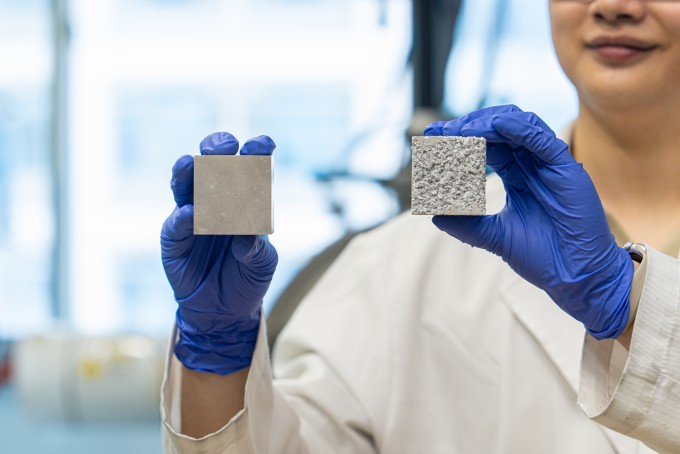
기존 마그네슘-알루미늄 합금(오른쪽)은 3일 동안 소금물에 담가 두자 심하게 녹았지만 스칸듐을 미량 첨가해 코어-쉘 설계 기술이 적용된 마그네슘 합금(왼쪽)은 큰 변화가 없었다. UNIST 제공 상용 합금과 비교해 부식 속도가 7분의 1에 불과한 고내식 마그네슘(Mg) 합금이 개발됐다. 울산과학기술원(UNIST)은 박성수 신소재공학과 교수팀이 마그네슘 합금 속 철 불순물을 제거하는 대신 작은 구조체 안에 가두는 설계 기술을 개발해 고내식성 마그네슘 합금을 구현했다고 12일 밝혔다. 연구결과는 지난달 23일(현지시간) 국제학술지 '사이언스 어드밴시스'에 공개됐다. 마그네슘 합금은 가볍고 단단해 자동차·항공우주·전자기기에서 유망한 경량 소재로 꼽히지만 수분이나 소금기가 있으면 쉽게 부식된다는 점이 문제다. 특히 철(Fe) 불순물이 합금 내부에 전기화학적인 전위 차이를 만들며 주변 마그네슘 부식을 가속한다. 그동안 마그네슘 기반 소재의 내식성을 높이려면 철 함량을 최대한 줄인 값비싼 고순도 원료가 필요하다는 인식이 강했다. 연구팀은 마그네슘 합금에 스칸듐(Sc)을 미량 첨가해 고내식성 합금을 개발했다. 스칸듐 화합물 껍질이 철을 감싼 '코어-쉘' 구조가 형성돼 철이 마그네슘과 직접 닿는 것을 방지한다. 실험 결과 마그네슘-알루미늄 합금은 3일 동안 소금물에 담가 두자 심하게 녹았지만 스칸듐을 미량 첨가한 합금은 큰 변화가 없었다. 금속의 두께 변화량을 기준으로 부식 속도는 60분의 1에 그쳤다. 알루미늄 외에 망간, 아연 등이 첨가된 상용 마그네슘 합금에서는 스칸듐을 극미량 첨가하는 것만으로도 부식 속도가 7분의 1로 줄었다. 박 교수는 "개발된 합금은 초고순도 마그네슘 합금보다 철 불순물 함량이 6배 이상 높은데도 부식 속도가 더 느리다"며 "값비싼 초고순도 원료에 대한 의존도를 낮출 수 있어 고가 소재로 인식되던 마그네슘 소재의 산업 경쟁력을 높일 수 있는 설계 기술이 될 것"이라고 말했다. <참고 자료> - doi.org/10.1126/sciadv.aee9898 왼쪽부터 박성수 UNIST 신소재공학과 교수, 김정기 연구원. UNIST 제공
사이언스 어드밴시스UNISTCIA구조IS -
 세계
세계North Korea resumes long-delayed naval base construction amid fleet modernization
A naval gun aboard North Korea’s new 5,000-ton-class destroyer Kang Kon is test-fired during a demonstration observed by North Korean leader Kim Jong-un on July 3. (KCNA via Yonhap) North Korea appears to have resumed construction of a long-delayed naval base on its east coast, as Pyongyang accelerates efforts to modernize its fleet with new destroyers and a nuclear-powered submarine. New structures, believed to be temporary housing or tents for construction workers, appeared between Aug. 6-9 at the Tapchon Bay naval base site in Munchon, in North Korea's Kangwon Province, according to an analysis of Planet Labs satellite imagery by NK News. The outlet said the structures could accommodate personnel expected to work on planned administrative and training facilities, suggesting that construction at the site has resumed after years of little visible activity. Construction has also been observed around the base. A new road and small bridge have been under construction since mid-May near Sokchon Bay west of Tapchon Bay, while road construction and land-clearing work began last month on a peninsula south of the base, according to the report. NK News said the activity could indicate that North Korea seeks to expand the facility's size and functions beyond its original plans. White structures or tents believed to be for conscripted construction workers are seen at the naval base project site in early August. The graphic was created by NK News senior analytical correspondent Colin Zwirko using satellite imagery from Planet Labs. (Courtesy of NK Pro and Planet Labs) The Munchon base has been under development for more than a decade. North Korea built more than 10 piers and docking facilities capable of accommodating large warships and submarines between 2015 and 2017. A railway bridge connecting the base to the national rail network was completed in 2018, but construction largely stalled afterward. North Korean leader Kim Jong-un visited the unfinished site in September 2024 and called completion of the base an “urgent task.” The renewed construction comes as North Korea rapidly expands its naval capabilities. Pyongyang has unveiled two new 5,000-ton-class destroyers, the Choe Hyon and Kang Kon, and has been conducting weapons and navigation tests involving the vessels. The North is also pursuing a nuclear-powered submarine program, while Kim in June ordered the construction of a 10,000-ton-class cruiser. But infrastructure for the new vessels has lagged behind. The Choe Hyon, commissioned in June, has remained at the civilian cargo port of Nampo on the west coast, while the Kang Kon has been seen operating from Rason on the east coast after completing a series of sea and missile tests. Kim acknowledged the shortage during the Choe Hyon commissioning ceremony in June, saying North Korea lacked bases capable of accommodating large warships such as destroyers. The renewed work at Munchon could therefore provide a permanent base for the North’s new destroyers and future nuclear-powered submarines while expanding the operational reach of its east coast fleet. Kim has also called for the Navy to develop into a force capable of regularly operating beyond North Korea’s territorial waters. Kim Jong-un (center) and senior officials observe tests of key weapons systems, including missiles and naval guns, aboard the new 5,000-ton-class destroyer Kang Kon on July 3. (Korean Central Television via Yonhap) Ballistic missile launch Separately, North Korea fired a ballistic missile into the East Sea on Wednesday, South Korea’s Joint Chiefs of Staff said. The military said it detected the launch at around 6 a.m., but did not immediately disclose the location. The missile flew about 700 kilometers, the military said without disclosing the altitude reached. “Our military has strengthened surveillance and vigilance against possible additional launches, while South Korea, the United States and Japan are closely sharing information on the North Korean ballistic missile and maintaining a full readiness posture,” the JCS said. The launch came two days after South Korea and the United States announced plans to conduct their annual Ulchi Freedom Shield exercise from Aug. 17-27. North Korea has long denounced major South Korea-US military exercises as rehearsals for an invasion and has often responded with missile launches and other military activities. Wednesday’s launch came six days after North Korea fired short-range ballistic missiles into the East Sea from the Wonsan area on Aug. 6. It marked North Korea’s 11th ballistic missile launch event this year.
PERESSCIAIMAAPI -
 세계
세계Samsung, SK hynix chip clusters get new power supply road map
Honam complex to receive initial 3 GW for 2029 fab operations; Yongin clusters to require over 14 GW by 2041 KEPCO President and CEO Kim Dong-cheol speaks during the signing ceremony Wednesday. (KEPCO) South Korea laid out a new power supply road map Wednesday for planned semiconductor clusters involving Samsung Electronics and SK hynix, as the government seeks to ensure electricity shortages do not delay the scheme. The southwestern Honam semiconductor complex will initially receive about 3 gigawatts of power to support the start of fab operations in 2029, with capacity later expanding to more than 6 GW, according to the Ministry of Climate, Energy and Environment. Two semiconductor complexes in Yongin, Gyeonggi Province, are expected to require more than 14 GW by 2041, with electricity to be supplied in phases as new transmission lines and power generation facilities come online. The government, Jeonnam-Gwangju Special Metropolitan City, Samsung Electronics, SK hynix and state-run Korea Electric Power Corp. signed three agreements Wednesday covering power supplies for the Honam and Yongin projects. “The key to the success of the semiconductor megaprojects is ensuring a swift power supply,” Climate Minister Kim Sung-hwan said in a statement. “The government, businesses and local authorities will work as one team to drastically shorten administrative procedures and ensure electricity is supplied in time for the construction of the new industrial complexes.” The Honam complex, announced June 29 as part of the government’s push to establish a major semiconductor production base outside the Seoul metropolitan area, is expected to eventually require more than 6 GW of electricity. Power infrastructure capable of supplying about 3 GW will be built first to allow initial fabs to begin operations in 2029, with additional facilities to raise capacity above 6 GW as the complex expands. In Yongin, the government plans to use nearby transmission lines and three 1-GW liquefied natural gas power plants to provide initial electricity to the national semiconductor complex, which is planned to house six fabs. The approach is intended to secure power before longer-distance transmission infrastructure is completed, amid difficulties in building new transmission lines. The separate Yongin general industrial complex began receiving electricity in July through a new line connecting the Sinanseong and Dongyongin substations. Additional transmission lines are planned for 2031 and 2032.
Samsung ElectronicsSWIFTPERESSCIA -
 세계
세계Lee vows full backing for 7 future industries to drive next wave of growth
President Lee Jae Myung (center) listens to a policy presentation by Deputy Prime Minister and Science and ICT Minister Bae Kyung-hoon during a briefing on the government's "seven seed technologies for future growth" initiative at Cheong Wa Dae on Wednesday. (Yonhap) President Lee Jae Myung on Wednesday pledged full government support for seven advanced technologies, describing them as the country's next "mega projects" that will drive economic growth and strengthen national competitiveness in the artificial intelligence era. Speaking at a briefing on the government's "seven seed technologies for future growth" initiative at Cheong Wa Dae, Lee said the technologies would become both the country's next growth engines and core strategic national assets. "The seeds of advanced technologies we plant today will one day grow into giant trees and become new mega projects," Lee said. The meeting brought together around 60 government officials, researchers, entrepreneurs, venture capital investors and science and engineering students to discuss ways to foster seven strategic industries identified by the presidential office as key assets for South Korea's economy and national security. The seven "seed technologies" are small modular reactors, nuclear fusion, renewable energy, quantum technology, aerospace, advanced biotechnology, and supply chains for critical minerals, materials, parts and equipment. The initiative is designed to build the next generation of growth industries beyond the government's existing three mega projects centered on semiconductors, artificial intelligence and AI data centers. The presidential office said the meeting sought ways to support South Korea's AI transformation while securing and nurturing advanced technologies that will underpin the country's next phase of economic growth. The government plans to group the seven sectors into three strategic pillars: future clean energy, consisting of SMRs, nuclear fusion and renewable energy; next-generation frontiers, comprising quantum technology, aerospace and advanced biotechnology; and advanced supply chains for critical minerals, materials, parts and equipment. It also unveiled sector-specific road maps. The government aims to commercialize light-water SMRs by 2035 while beginning construction of non-light-water SMRs during the 2030s. It plans to generate electricity through nuclear fusion by the late 2030s, develop a domestically produced 100-qubit quantum processor by 2029, launch a privately led lunar lander by 2030 and establish an independent low-Earth-orbit satellite communications network by 2035. It also aims to commercialize brain-computer interface technology by 2035. A central pillar of the initiative is public-private collaboration. For capital-intensive technologies such as non-light-water SMRs, fusion reactors, quantum chip foundries and gene and cell therapies, the government plans to establish jointly funded special purpose companies to support projects from research and development through commercialization, demonstration and regulatory reform. The strategy also includes measures to overhaul South Korea's research ecosystem. Universities will receive block funding to support large-scale, long-term research, while government-funded research institutes will be transformed into organizations responsible for long-term national missions following the planned abolition of the Project-Based System. To oversee implementation, the government will launch a public-private task force, headed by Deputy Prime Minister and Science and ICT Minister Bae Kyung-hoon, to coordinate the development of the "seven seed" technologies. Progress on sector-specific road maps will be reviewed regularly through ministerial meetings on science and technology policy. Lee said the rapid pace of technological change makes it increasingly difficult to predict which industries will emerge as growth drivers. "One common characteristic of cutting-edge technologies attracting attention today is that technological replacement cycles are becoming extremely fast," he said. "Individuals and countries alike will be left behind if they fail to keep up with change." Pointing to semiconductors as an example, Lee said the industry had entered what he described as a structural boom after recently facing concerns over a prolonged downturn. "We are living in an era of great transformation, where it is extremely difficult to predict which advanced technologies will emerge in the coming years or how the industrial landscape will change," he said. Lee stressed that South Korea must capitalize on its strengths in semiconductors to prepare for the next stage of growth driven by AI. "It is up to us whether we become a leader that enjoys limitless opportunities or a follower constantly exposed to the risk of being left behind," he said. "We must take advantage of the tremendous opportunity created by the semiconductor industry and prepare in advance for the next growth engine in the era of artificial intelligence." Calling on researchers and innovators to lead the country's technological transformation, Lee urged participants to help South Korea evolve beyond being a semiconductor powerhouse into a global leader in advanced science, technology and talent. "The government will provide firm support so that our innovative companies and scientists can freely pioneer new markets and boldly take on new challenges," he said. Bae said he would personally oversee implementation of the initiative as head of the new task force. "The mega projects and the seven seed projects will serve as twin engines that work independently and together to build an irreplaceable South Korea," he said.
supply chainReactPERESSCIA -
 세계
세계Ahn Ha-young debate: Why does a Korean actor’s family history still matter?
The controversy reveals how sensitive Korea remains about its colonial past — and why public figures should know better, experts say Ahn Ha-young poses for a photo during a press conference held in Seoul, Aug. 5 (Netflix) Ahn Ha-young’s rising career has hit a major roadblock after comments about her family history sparked backlash over allegations that her great-grandfather was linked to Japan’s colonial rule of Korea, just days before Liberation Day on Aug. 15. The uproar has revived the debate over whether descendants should be held accountable for their ancestors’ actions — with experts stating the Korean public increasingly places more weight on how descendants conduct themselves today than on their lineage alone. The issue at hand emerged during Ahn’s promotional campaign for "Our Sticky Love," Netflix Korea’s highly anticipated romantic comedy, which premiered globally last week. Ahn, who made her acting debut in 2019, has spent much of her career in supporting roles, appearing in projects including the hit series "The Trauma Code: Heroes on Call" and "Doona!" "Our Sticky Love" marks one of her first major leading projects. At a time when Ahn was gaining prominence, her mentions of her family background on several television programs resurfaced, with one of the most recent examples being her Aug. 7 appearance on KBS’ variety show "Problem Child in House." During the show, Ahn said her great-grandfather had opened a Western-style clinic in Hanyang (Seoul's former name) and treated Emperor Gojong. She added that h er grandfather, father and older sister are doctors, making hers a four-generation family of doctors. Although Ahn did not identify her great-grandfather by name during the broadcast, online speculation soon pointed to Ahn Sang-ho, a doctor who practiced during Japan’s colonial rule of Korea. The great-grandfather Attention quickly turned to Ahn Sang-ho’s activities during the colonial period, particularly his involvement with the Daejeong Friendship Association. Founded in 1916 as a business organization, the group was led by Min Yeong-gi, a known pro-Japanese collaborator, and included several figures associated with Japan’s colonial government. Among them was Yi Wan-yong, one of the signatories of both the 1905 Eulsa Treaty and the 1910 Japan-Korea Annexation Treaty, which formally placed Korea under Japanese rule. The allegations triggered immediate backlash against Ahn. Her agency, Bistus Entertainment, initially dismissed claims that Ahn Sang-ho was a pro-Japanese collaborator on Monday but reversed course the following day. Further verification had confirmed historical records identifying Ahn Sang-ho, the actor's great-grandfather, as a council member of the Daejeong Friendship Association. The agency apologized for issuing its initial statement before sufficiently verifying the information. Press interviews with Ahn and her co-star, Jung Hae-in, were subsequently canceled, dealing a setback to the drama’s global promotional campaign as well as her multi-million dollar commercial ad opportunities. As the controversy intensified, Ahn issued a public apology Wednesday, saying she had been unaware of her ancestor’s past. "Our Sticky Love," starring Ahn Ha-young (Netflix) According to experts, the intensity of the backlash may hinge not simply on the existence of the historical record, but on how Ahn’s great-grandfather’s role during the colonial period is interpreted. “There were different degrees of collaboration with Japan during the colonial period,” said Lee Sung-min, an associate professor in the Department of Media Arts and Sciences at Korea National Open University. While some figures may technically be categorized as pro-Japanese despite having had limited choices under colonial rule, Lee said others actively cooperated with the colonial authorities. “Ahn’s great-grandfather appears to fall closer to the latter category,” Lee said. Historic sensitivity But experts add the more fundamental issue may not be Ahn’s ancestry itself, but how she presented her family history. “People would be more uncomfortable not with the fact itself, but with how the descendants conduct themselves,” said pop culture critic Jung Duk-hyun, pointing to cases in which descendants distort the past or speak about their ancestors’ actions with pride. “Even if someone is a descendant, if they have a negative view of their ancestor’s actions, they’re unlikely to go around highlighting or taking pride in that connection. They can instead take a more humble stance or show greater interest in and engagement with those historical issues. I don’t think the (Korean) public would necessarily criticize them if they responded in those kinds of ways,” Jung said. "Our Sticky Love," starring Ahn Ha-young (Netflix) The controversy arrives at a particularly notable moment in Korea-Japan relations, as cultural exchange between the two countries has entered a high point in relations. According to Hankook Research, Japan’s favorability rating among South Koreans stood at 44.8 degrees in a July 2026 survey, up from 42.7 degrees in April and 44.6 degrees in January. It was the highest rating recorded since the firm began measuring favorability toward the countries surrounding Korea — China, Japan, North Korea, Russia and the US — in 2018. The survey uses what it calls a “feeling thermometer” ranging from 0 degrees, meaning very unfavorable, to 100 degrees, meaning very favorable. However, experts stress that Koreans maintain a boundary between contemporary lifestyle trends and historical accountability. "Cultural exchange and consuming each other’s cultural content is essentially a matter of personal taste," Jung said, noting that audiences separate entertainment choices from unresolved colonial grievances. Ahn Ha-young speaks during a press conference held in Seoul, Aug. 5 (Yonhap) That growing separation between Japanese culture and the country’s colonial past, however, does not necessarily apply to the descendants of those who collaborated with Japan. “Obviously, (descendants of pro-Japanese collaborators) are not going to be viewed favorably. But I do think some of these tensions are gradually being resolved,” Lee said, adding that since anti-Japanese sentiment has been passed down across generations, there is also a growing degree of nuance and rationality in how some Koreans approach the issue. "If someone can clearly distinguish between the two by saying, 'What my parent did was wrong, but I am a different person,' then people can see that person as someone who shares the same basic values," Lee said. "But in this case, that distinction wasn’t really made. There seemed to be a lack of awareness of what was wrong in the first place."
NetflixDRAMPERESSCIA -
세계
'9명 정원 초과' 엘리베이터 탔다가…전원 날벼락
러시아의 한 고층 아파트에서 정원을 초과해 탑승한 엘리베이터가 갑자기 추락하면서 승객 4명이 다리를 크게 다치는 사고가 발생했습니다. 영상에는 엘리베이터가 갑자기 아래로 떨어지면서 탑승객들이 서로 부딪히고 바닥으로 내동댕이쳐지는 모습이 담겼습니다. 당국이 조사 결과에 나선 결과, 해당 아파트는 2021년 완공됐지만 정식으로 사용 승인을 받지 않은 불법 건물인 것으로 전해졌습니다. (구성 : 양현이, 영상편집 : 장유진, 디자인 : 이수민, 출처 : New York Post, X (@SICNoticias), 제작 : 디지털뉴스부)
러시아CIA아파트디자인사고 -
아직 공개된 뉴스가 없습니다.
새 기사가 준비되는 대로 이곳에 표시됩니다.