 Rental notices for studio apartments are posted on a community bulletin board near Chung-Ang University in Dongjak District, southern Seoul, on Aug. 12. YONHAP
A 24-year-old surnamed Shin, who lives in Nowon District, northern Seoul, spent about four hours commuting round trip by subway last semester to their university in Gwanak District, southern Seoul.
Shin had previously lived in shared housing near the school and was considering moving into a studio apartment, but decided against it because the monthly rent was too expensive. She ended up moving back into her parents’ house.
A 22-year-old Cho, who lives in Anyang, Gyeonggi, also chose to commute by public transportation to a university in Gwanak. The distance between the two covers roughly 10 to 15 kilometers (6 to 9 miles), depending on the exact location.
“I didn’t want to ask my parents for money, so I’ve been earning money at a part-time job and tutoring, but I felt it would be difficult to cover housing costs on top of everything else,” Cho said.
Housing costs for young people in university districts have continued to rise after the government implemented new real estate measures last year. Since then, the number of jeonse homes has declined, and monthly rents have surged. Under Korea’s jeonse system, tenants typically pay a high lump-sum deposit instead of monthly rent.
Beginning June 28 last year, the government implemented the measures — focused on the greater Seoul area — to tighten household debt management, reducing loan limits, lowering guarantee ratios for jeonse loans and cutting mortgage limits, including loans used by landlords to return jeonse deposits to departing tenants.
Experts also expect the decline in jeonse listings and the rise in monthly rents to intensify following the Aug. 3 tax reform plan.
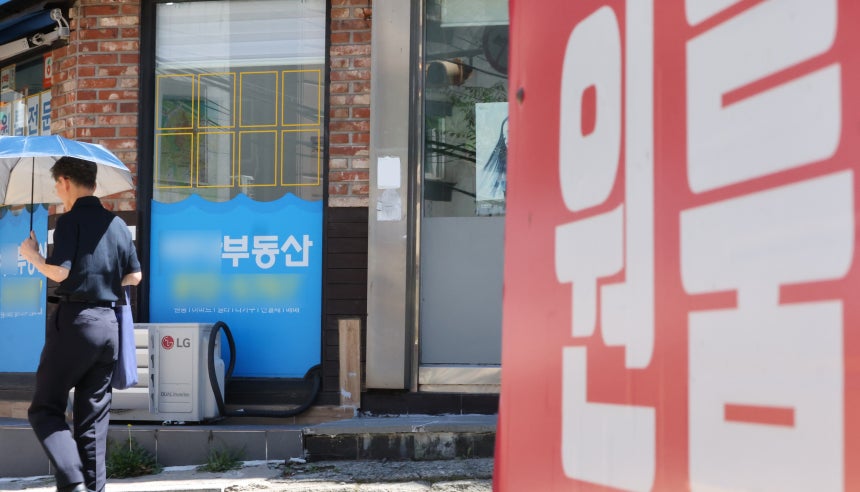 A real estate agency near Chung-Ang University in Dongjak District, southern Seoul, on Aug. 12 YONHAP
Young people trade convenience for cheaper housing
As rents around universities soar, a growing number of people living on their own are giving up on living close to school or work and moving back to their family homes farther away or relocating to areas with more affordable rent.
Even studio apartments and officetels — buildings that combine commercial and residential spaces — rather than conventional apartments, have become too expensive for many students and young workers in central areas where universities and workplaces are concentrated.
A 25-year-old surnamed Kim, who has worked for a company in Mapo District, western Seoul, for three years, recently relocated from housing near work to Goyang, Gyeonggi.
“Paying close to 1 million won [$705] in rent every month was too much of a burden,” Kim said. “I moved to save on housing costs, even though it meant sacrificing convenience in my commute.”
Many young people are also being forced to accept a decline in their quality of life as they cut other expenses or take on additional part-time jobs to cope with soaring rents.
Kim Seong-min, a 25-year-old university student who found a place near his school in early August, nearly doubled his budget for both rent and the security deposit compared to the studio apartment he lived in three years ago. Even then, he could not find a home that met the conditions he had wanted.
He eventually settled for a place farther from both the subway station and his university. He put down 10 million won — half the money he had saved through a military savings account — as a security deposit.
“Once I pay 5 million won in university tuition, I don’t know how many months I’ll be able to live on the money I have left,” Kim Seong-min said. “I’m planning to find a part-time job as soon as possible.”
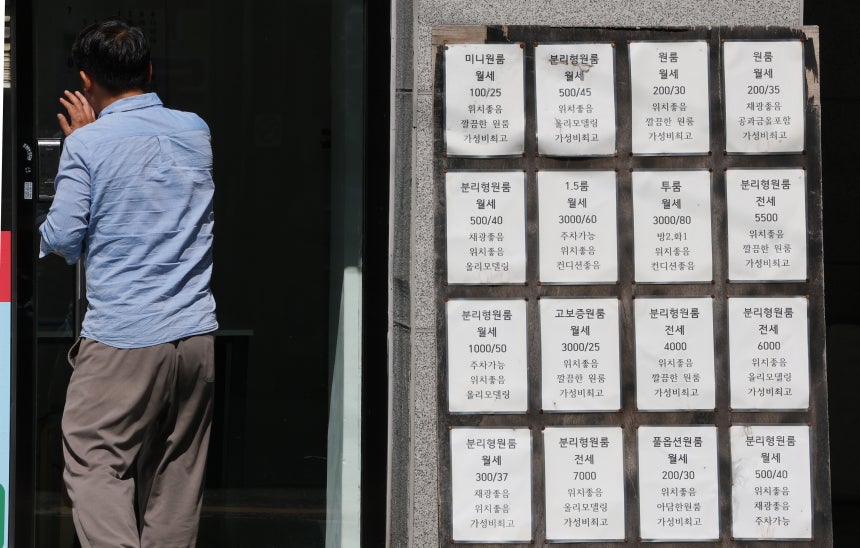 Rental notices for studio apartments are posted at a real estate agency near Seoul National University in Gwanak District, southern Seoul, on Aug. 12. YONHAP
The switch from jeonse to monthly rent
As jeonse listings decrease, people are shifting to find housing with monthly rent instead. Real estate agents in university districts say they have also seen jeonse listings decline and monthly rents rise since the real estate measures were implemented on June 27, 2025.
“For about a year now, jeonse listings have barely come onto the market, whether they're apartments, multifamily homes or officetels,” said a real estate agent who operates an office near Seoul National University Station in Gwanak District. “Out of every 100 contracts, there might be just one jeonse deal, if that.”
“Since jeonse listings have declined due to factors including tighter lending restrictions, demand has shifted toward monthly rentals, driving up prices,” said Seo Chan-won, a real estate agent at Daom, a real estate agency near Seoul National University Station.
“Monthly rents have risen by an average of about 60,000 to 80,000 won over the past year,” said another real estate agency representative in Gwanak. “Some landlords are now raising rents every quarter. Monthly rent for a newly built studio apartment of about 16.5 square meters [178 square feet] has risen to more than 1 million won.”
Demand for monthly rentals has risen further as office workers who have been priced out of apartments turn to officetels and multifamily homes, putting them in competition for rental homes in university districts. Sinchon in Seodaemun District, western Seoul, and the area around Seoul National University Station are prime examples, as both have large supplies of studio apartments while offering relatively easy access to major business districts such as central Seoul’s Gwanghwamun and southern Seoul’s Gangnam District.
“With jeonse loans becoming harder to obtain and listings declining, newlywed couples who have given up on apartments are coming to Sinchon to look for multifamily homes or officetels as their first homes,” said the head of a real estate agency in Seodaemun District.
Demand has also increased for shared houses, which generally require smaller deposits and lower monthly rents than studio apartments.
“Most of our tenants are workers, including civil servants at government agencies, and all of them have signed long-term contracts of at least a year,” said a share house operator in Gwanak District. “Many young people come here because they want to live close to their workplaces.”
 Prime Minister Han Seong-sook, right, listens to a real estate agent explaining the neighborhood’s studio apartment area near universities in Sinchon, Seodaemun District, western Seoul, on July 4. NEWS1
Rents climb as jeonse transactions tumble
The rise in prices as demand shifts from jeonse to monthly rentals is reflected in data.
The average monthly rent for a studio apartment near major universities in Seoul stood at 625,000 won last month, up 7.7 percent from a year earlier, according to statistics compiled by real estate platform Dabang based on listings registered on its service.
Monthly rents around Seoul National University rose an average of 26 percent from a year earlier, the largest increase among the university districts surveyed. Monthly maintenance fees rose an average of 10.9 percent to 84,000 won. For a home with a 10 million won deposit, that translates to roughly 710,000 won in monthly housing expenses.
At the same time, the number of jeonse transactions in major university districts across Seoul has fallen sharply.
There were 2,258 new jeonse transactions for officetels between August 2024 and August 2025 across five districts with major university areas — southern Seoul’s Gwanak and Dongjak, western Seoul’s Mapo, eastern Seoul’s Dongdaemun and central Seoul’s Seongbuk districts — according to the Ministry of Land, Infrastructure and Transport’s real estate transaction disclosure system.
The figure, however, fell about 20 percent to 1,809 between August 2025 and August this year.
In Seongbuk District, officetel jeonse transactions fell nearly 40 percent over the same period, from 167 to 101.
A prolonged housing squeeze expected
The real estate industry attributes the decline in jeonse listings and rise in monthly rents partly to tighter access to jeonse loans following the June 27, 2025, measures.
Real estate agents say the measures have pushed both tenants and landlords toward monthly rental contracts.
“Tenants are turning to monthly rentals because jeonse deposit loans have either become unavailable or their borrowing limits have been reduced, while landlords are converting jeonse homes into monthly rentals to secure cash because loans for returning jeonse deposits have been restricted,” a real estate industry source in Gwanak District said.
Experts expect the pressure on young people's housing costs to persist for some time following the Aug. 3 tax reform plan, which increased the tax burden on owners of multiple homes.
“As owners of multiple homes sell properties they don’t live in and had previously rented out under jeonse or monthly rental contracts, the supply of rental homes is shrinking and prices for the remaining homes are rising rapidly,” said Ma Kang-rae, a professor of urban planning and real estate at Chung-Ang University. “This situation is likely to continue for the next two to three years.”
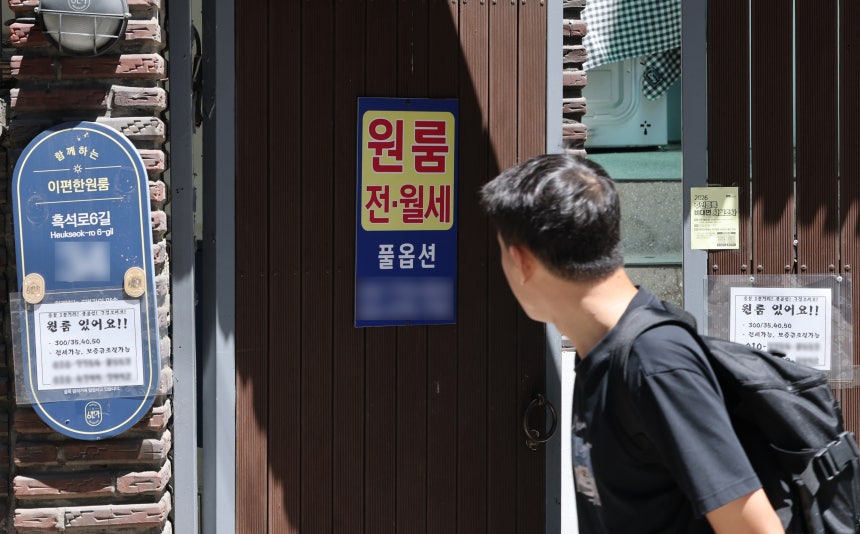 A rental notice for a studio apartment is posted near Chung-Ang University in Dongjak District, southern Seoul, on Aug. 12. YONHAP
The situation has also prompted calls for the public sector to increase housing supply.
“The government needs to rapidly expand public rental housing to restore the housing ladder for young people, low-income households and other groups vulnerable to housing insecurity,” Prof. Ma said.