ESS 뉴스
키워드 ESS 결과입니다.
-
 사회
사회Concern over Korea’s low birthrate eases, but pressure on couples to have children persists
A new survey finds seven in 10 Koreans still see the low birthrate as serious, while young women report especially strong pressure to have children. A newborn baby lays in a bassinet at a hospital in Goyang, Gyeonggi, on Dec. 26, 2025. YONHAP The share of people in Korea who view the country’s low birthrate as a serious problem has declined, though seven in 10 still consider it serious. However, about half continue to feel social pressure to have children, a level that has remained largely unchanged for four consecutive years. Among respondents, 70 percent said they viewed Korea's low birthrate as a serious problem, down 9 percentage points from 79 percent last year, according to the 2026 survey on perceptions of children and parenting released by Hankook Research. The share who said it is a problem, but not a serious one rose 7 percentage points from 15 percent to 22 percent. The survey was conducted from April 24 to 27 among 1,000 adults aged 18 and older nationwide. It had a maximum margin of error of plus or minus 3.1 percentage points at a 95 percent confidence level. The decline in the sense of urgency was particularly pronounced among people in their 40s and younger. The share who described the low birthrate as a serious problem stood at 53 percent among those aged 18 to 29, 56 percent among those in their 30s and 66 percent among those in their 40s. The shares were down 16 to 19 percentage points from a year earlier. By contrast, the figure ranged from 78 to 84 percent among people aged 50 and older, remaining at levels similar to last year. Social pressure surrounding childbirth, however, continued to weigh on respondents. A total of 55 percent agreed that Korean society pressures married couples to have children, while 50 percent agreed that people who do not have children are viewed negatively. Both figures have remained at similar levels since 2023. A visitor browses pregnancy, childbirth and child care products at a fair held at Coex in Gangnam District, western Seoul, on Aug. 6. YONHAP Young women were the group most likely to feel pressure to have children. Among women in their 30s, 80 percent said they felt that society pressured couples to have children, while 76 percent of women aged 18 to 29 agreed as well. The figures are 27 to 36 percentage points higher than among men in the same age groups. The share who felt that people without children were viewed negatively was also significantly higher among young women than their male peers, at 75 percent among women in their 30s and 70 percent among women aged 18 to 29. The most commonly cited cause of the low birthrate was the growing financial burden of raising children, including education costs, at 48 percent. This was followed by rising housing costs at 43 percent, the time and energy required to raise children at 38 percent and employment instability among young people at 34 percent. "While perceptions of the low birthrate as a crisis have declined, the social pressure to have children has remained unchanged," said Ahn Yu-jin, an intern researcher at Hankook Research. "Policy has also been moving toward having society share the burden of having and raising children."
PERESSCIAWHOCLI -
 경제
경제Samsung's next foldable frontier is rollable: What we know so far
Samsung still dominates the foldable market, but price-cutting Chinese manufacturers and Apple, with its famously loyal user base, are working tirelessly to catch up in the race. A visitor looks at Samsung Display's rollable display at the K-Display 2023 exhibition at Coex in Gangnam District, southern Seoul, on Aug. 16, 2023. NEWS1 A wider Galaxy Z Fold 8 has just been released, but Samsung barely has time to catch its breath. It is now working on a new-generation form factor: an expandable screen that it is dubbing a “rollable” display, aiming to widen the gap with foreign makers such as Apple and Huawei. Samsung still dominates the foldable market that it pioneered seven years ago, but price-cutting Chinese manufacturers — and soon Apple, with its famously loyal user base — are working tirelessly to catch up in the race for share. Dutch tech outlet GalaxyClub added a rollable lineup to Samsung’s product pipeline for next year, which includes four other foldable variants — the Z Flip 9, Z Fold 9, Z Fold 9 Ultra and TriFold 2. While Samsung Electronics declined to comment on GalaxyClub’s report, an executive confirmed that a rollable line is in the pipeline. “It’s going to take a while, but we are planning on [the rollable’s] commercialization,” Moon Sung-hoon, the executive vice president in charge of the hardware, mobile experience division at Samsung Electronics, said at the latest Galaxy Unpacked event briefing in London. For years, several reports have been made about this development, but most of it remains speculation. A Samsung Electronics spokesperson, however, told the Korea JoongAng Daily that the rollable phone is “under development, but no target date has been set for its release.” The timeline may be uncertain, but the new form factor is coming nevertheless. Here is a compiled list of clues gleaned from online sleuthing. The Rollable Flex that Samsung Display unveiled at Display Week 2023, hosted by the Society for Information Display in Los Angeles in May 2023 SAMSUNG DISPLAY What to expect for the rollable Samsung filed a patent for the new form factor in June 2023, which shows a Samsung device expanding sideways, according to a report from WearView. An interesting point of the phone is that its camera is placed on the moving side of the body as the display rolls out, rather than placing the bulky component behind the flexible display. When the device closes, the camera module is fitted into a cutout in the frame. This could resolve the thickness issue seen in some of its prior foldables, which still felt chunky when closed. Some of the other leaks said that the phone will feature a 10-inch organic light-emitting diode (OLED) panel with a 16:9 aspect ratio and 440 ppi pixel density. This is not the first time that a Korean manufacturer has tried to bring such a form factor to life. LG Electronics, before it exited the smartphone business in 2021 due to mounting losses, had been developing a similar device that would have been the world’s first rollable phone. Leaked images of the handset show that the cameras are placed vertically on the device’s stationary side. The concept of the world's first rollable phone, under development by LG Electronics, was introduced at CES 2021 in Los Angeles in January 2021. LG ELECTRONICS The unreleased phone resold for millions of won on Korean secondhand marketplaces for curious tech lovers after hundreds of prototypes were distributed to some executives and developers as mementos. Samsung Electronics Executive Chairman Lee Jae-yong, left, holds a device speculated to be the prototype of a rollable phone at the company's research center in southern Seoul in November 2020. SCREEN CAPTURE Samsung has been developing the product for some time now as well. In November 2020, Samsung Electronics Executive Chair Lee Jae-yong was spotted holding a silver device, strongly speculated to be the next-generation phone, at the company’s research center in southern Seoul. The photos show a researcher standing next to him and miming how the phone could expand. Samsung’s display unit has already showcased several slidable and rollable concepts over the years, including the Flex Hybrid, a foldable-slidable hybrid that can expand its screen from 10.5 inches to 12.4 inches, and the Rollable Flex, a scroll-like display that can expand to five times its original size. Samsung Display also has experience mass-producing a rollable OLED panel, although it was for a laptop, and supplied the world’s first rollable OLED panel for Lenovo’s ThinkBook Plus Gen 6 Rollable, which can switch from a 14-inch horizontal display to a 16.7-inch vertical display at the press of a button. In other words, no expandable phone has yet made it to market. Rumors have circulated for years that Chinese companies such as Huawei, Oppo, Tecno and Vivo have filed related technology patents and were planning commercial releases, but none have materialized. Tecno unveiled its Phantom Ultimate concept phone in 2023, showcasing a rollable display that expands from 6.55 inches to 7.11 inches in about a second via a single motor mechanism, but it has remained just a concept. Why isn’t Samsung stopping? Samsung and China’s Huawei originally dominated the foldable market, but Apple will make its entrance with its own foldable next month. Samsung initially held a 40 percent market share, followed by Huawei’s 30 percent, according to market tracker Counterpoint Research. But from 2026, Samsung’s share is expected to shrink to 32 percent, with Apple taking 25 percent of the share from the two incumbents, followed by Huawei’s 24 percent. A Samsung Display employee unfolds the Rollable Flex presented at Display Week 2023, hosted by the Society for Information Display in Los Angeles in May 2023. SAMSUNG DISPLAY “2026 will mark a new phase for the foldable smartphone market,” said Liz Lee, an associate director at Counterpoint Research. “Apple’s entry is expected to lift overall consumer awareness and raise the benchmark for premium foldables, but Samsung still has a clear advantage in product maturity, channel reach and foldable user experience.” Conscious of Apple’s entry, Samsung chose to keep the price hike for its new wider variant to a minimum. The Z Fold 8 starts at $1,899 for the base standard model, and the higher-tier Fold 8 Ultra starts at $2,099. Apple’s foldable is expected to start somewhere between $2,000 and $2,399. The U.S. manufacturer is reportedly already developing follow-up foldable iPhones. With another strong competitor entering the market and component costs rising due to the AI-driven memory crunch, Samsung has no time to rest if it wants to keep its top position. Technology has matured; there are almost no eye-popping features that can be added to a phone’s hardware despite continuing software enhancements, including new AI features. Smartphones have become more than simple communication tools, but makers still need a good reason to raise prices for products that are now almost as expensive as laptops. The new rollable form factor could become a reason that Samsung maintains its dominant market share — if it succeeds.
Samsung ElectronicsAppleOLEDPERESS -
 정치
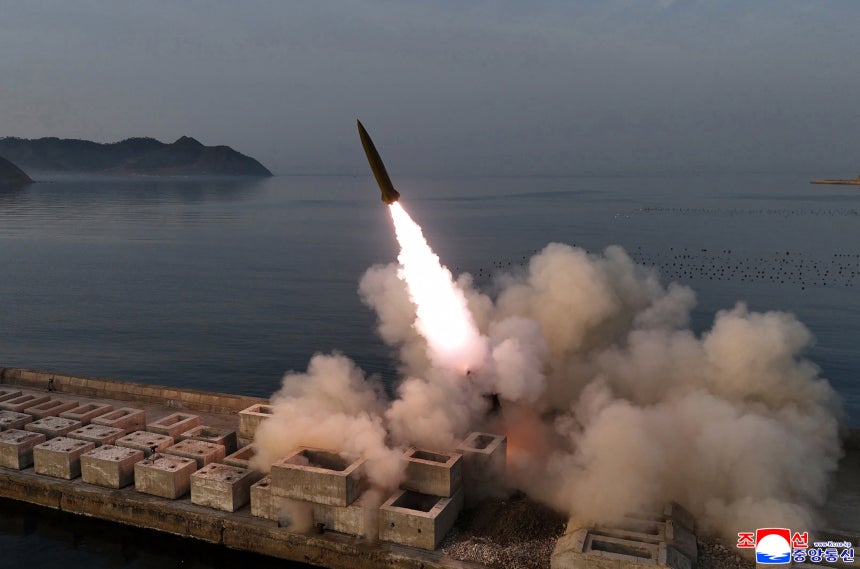
정치North Korea fires ballistic missile just six days after previous launch
North Korea fired at least one ballistic missile off its east coast ahead of a joint military exercise between South Korea and the United States. North Korea conducts a test launch of a tactical ballistic missile on April 20 in this photo released by the state-run Korean Central News Agency. YONHAP North Korea fired at least one ballistic missile off its east coast on Wednesday, days ahead of a joint military exercise between South Korea and the United States. “We have detected the missile launched from the Wonsan area of North Korea toward the East Sea at around 6 a.m.,” South Korea’s Joint Chiefs of Staff (JCS) said. The missile flew more than 700 kilometers (435 miles) and marked North Korea’s 11th ballistic missile launch this year. South Korea and the United States are reportedly conducting a detailed analysis of its exact specifications. The launch marks North Korea’s second ballistic missile test in under a week. It fired a short-range ballistic missile toward the East Sea last Thursday. The consecutive tests are seen as a protest against Ulchi Freedom Shield, the annual South Korea-U.S. combined military exercise, set to begin next Monday. After the launch, South Korea’s Office of National Security held an emergency security situation review meeting, attended by officials from the Ministry of National Defense, the JCS and other relevant agencies. “North Korea’s ballistic missile launches are provocative acts that violate United Nations Security Council resolutions,” the office said, calling for an immediate halt. The JCS added that it is working closely with allied countries to monitor the launch and prepare a response. “South Korean and U.S. intelligence authorities have tracked and shared related developments since the early stages of the launch and have also shared relevant information with Japan,” the senior military body said. “The military is closely monitoring North Korea’s various activities under a solid South Korea-U.S. combined defense posture and maintains the capability and readiness to […] respond to any provocation.
ESSCIAICEAIIS -
새 소식
goshot - 코드 스크린샷 생성기
주문 메시지를 읽는 LLM 파이프라인을 검증하려고 테스트 29개를 만들었는데, 그 중 정상 케이스는 4개뿐입니다. 나머지는 전부 함정입니다. 제일 많은 그룹은 "주문이 아닌 것" 6개. 상품명과 숫자가 다 있는 단순 문의를 주문으로 잡으면 안 시킨 물건이 출고됩니다 문제만 어렵게 내지 않고 대조할 상품 데이터에도 함정을 심었습니다. 폭만 다른 투명테이프 2종, 같은 숫자로 시작하는 상품 5종, 제각각인 박스 입수. 깨끗한 데이터로 시험보면 전부 통과하고 실전에서 무너집니다 가장 놓치기 쉬운 건 "학습이 쌓인 뒤"의 동작입니다. 테이프=48mm로 학습된 상태에서 "테이프 60 2박스"가 오면 명시 규격이 학습을 이겨야 합니다. 카탈로그 기능이 사고 기능이 되는 지점입니다 테스트 케이스 29개와 함정 심은 상품 목록은 전부 공개해 두었습니다. https://github.com/ramses203/llm-test-harness
ESSLLM사고ITGo -
새 소식
Instatic - Webflow, Framer, WordPress를 대체하는 오픈소스 셀프호스팅 비주얼 CMS
버그바운티는 기업이나 오픈소스 프로젝트가 외부 보안 연구자로부터 취약점을 제보받고, 유효성과 심각도에 따라 보상하는 제도임. 세계 최대 해킹 컨퍼런스인 DEF CON 34의 Bug Bounty Village에서 열린 「Navigating AI-Assisted Submissions」 토크 패널을 통해 HackerOne, Synack, Bugcrowd, Intigriti, YesWeHack 담당자들이 AI 도입 이후의 버그바운티 현장을 논의 패널의 공통 진단은 AI 자체보다 취약점 발견 속도와 검증·수정 속도의 격차 가 핵심 문제라는 것 전체 제출량은 전년 대비 약 2배 증가 유효 리포트의 비율은 비슷하게 유지됐지만, 실제 Critical 취약점은 약 3배 증가 HackerOne에서는 검증됐지만 아직 해결되지 않은 취약점이 21배, 미해결 Critical 취약점은 25배 늘어남 Critical 취약점 해결률은 83% 이상에서 40% 미만으로 하락 AI slop이 만드는 세 가지 문제 존재하지 않는 취약점을 그럴듯하게 설명하는 환각 리포트 취약점은 유효하지만 핵심 영향도와 재현 방법이 수십 문단에 묻히는 과도하게 긴 리포트 에이전트를 실제 프로그램에 연결해 검증 없이 대량 전송하는 자동 제출 리포트 이에 따라 Bugcrowd는 반복적인 무효 제출과 submission farming 계정을 제재하고, HackerOne은 버그바운티 참여자의 신원 확인을 의무화하는 방향으로 정책을 변경 중 좋은 AI 보조 리포트의 기준 첫 부분에 취약점의 실제 영향도를 제시 재현에 필요한 단계와 증거만 남김 일반적인 취약점 정의나 불필요한 배경 설명은 줄임 AI가 판단한 심각도를 연구자가 다시 검증 제출하기 전에 처음부터 끝까지 직접 읽고 재현 AI의 장점도 분명함 비영어권 연구자의 번역·작성 부담을 줄임 대규모 엔드포인트 검사나 문서와 구현의 비교처럼 사람이 하기 어려웠던 연구를 가능하게 함 한 프로그램을 4~5년간 연구한 팀이 AI를 도입한 뒤, 이전에 놓쳤던 Critical 취약점 5개를 2주 만에 발견한 사례도 소개됨 결국 중요한 질문은 "AI를 사용했는가"가 아니라 "어디까지 AI에게 맡겼는가" 반복 탐색과 번역, 초안 작성은 AI에게 맡길 수 있음 공격 범위 결정, 재현, 심각도·영향도 판단, 최종 검토는 연구자가 직접 해야 함 내가 직접 하지 않을 일이라면, 나의 AI에게도 시키지 말아야 함
에이전트ESS취약점AI공격 -
 사회
사회Three men rescued after 11 hours adrift off Incheon coast
The Korea Coast Guard found the men clinging to their capsized boat after an overnight search. A vessel is sailing off the coast of Incheon on Sept. 26, 2020, in this photo indirectly related to the article. YONHAP Three men reported missing during a fishing trip off the coast of Incheon were found 11 hours after last contact by the Korea Coast Guard on Monday. Officials found them around 6:12 a.m. near Choji Island in Ongjin County, Incheon, popular for sea fishing and marine leisure activities . The men were reportedly clinging to their capsized motorboat, wearing life jackets. None suffered serious injuries. The three had gone fishing on Sunday, setting off from Yeongjong Island, Jung District, Incheon. The wife of one of the men reported her husband missing to police at around 10:30 p.m. after losing contact with him following a final phone call at around 7:10 p.m. Following the report, the coast guard formed a regional rescue headquarters and deployed patrol vessels, aircraft and ships from related agencies to search the waters near Choji Island and Jawol Island, where the men were found.
ESSCIAICEADRCLI -
 경제
경제How Hyundai beat Volkswagen by cracking the formula for surviving China's price war
With the Korean automotive group's operating profit trouncing the German giant's, competition in sales may narrow as the owner of Audi and Porsche goes for a heavy restructuring. Volkswagen's Atlas, left, and Hyundai Motor's Palisade JOONGANG ILBO [NEWS ANALYSIS] Hyundai Motor Group has overtaken Volkswagen Group in operating profit since the beginning of last year, and is closing in on the German marque’s once-unassailable edge in vehicle sales. Volkswagen’s recent announcement that it will cut 15 percent of its global work force across all of its brands, which include the likes of Audi, Porsche, Lamborghini and Bentley, along with the prospect of plant closures, has only sharpened the sense that Hyundai’s ascent may not stop at profitability alone — and could extend to sales volume as well. "There's a real chance Volkswagen falls short of its revised 9 million-unit target at this pace, and Hyundai keeps closing the gap in sales volume," said Kwon Yong-ju, a professor in Kookmin University's automotive and transportation design department. Volkswagen's sales totaled 4.41 million units in the first half of 2025 compared to Hyundai's 3.65 million units, a gap of roughly 760,000 units. But in the first half of this year, the German brand's sales had fallen to 4.13 million and the Korean automaker's to 3.6 million, narrowing that gap by about 30 percent to roughly 530,000 units. By operating profit, the Korean auto group has outpaced Volkswagen since the first half of 2025, a lead it has held again this year. The diverging fortunes of the two automotive powerhouses, analysts say, trace back to their strategies against the inflow of price-competitive Chinese cars, as Volkswagen remains tethered to the Chinese market and a volume-driven model, while Hyundai has pivoted toward higher-margin electric and hybrid vehicles, prioritizing profitability over sheer sales volume. Margins over volume As EV demand cooled amid market saturation and the expiration of U.S. tax credits, Hyundai Motor Group, which includes the Hyundai, Kia and Genesis brands, swiftly moved to ramp up hybrid production, and its global hybrid sales jumped 23 percent on year to 1.12 million units last year, around 15 percent of its total sales. Sales of Volkswagen's hybrids, which consist mostly of plug-ins, stayed at roughly 430,000 units over the same period, or just about 5 percent of its sales. Hybrids typically carry margins around 10 percent higher than conventional gasoline vehicles thanks to low costs of development and manufacturing, while the fuel efficiency lets automakers command premium pricing. Sales of Hyundai’s hybrid cars jumped 74 percent in the U.S. market in June thanks to variants of the Santa Fe, Sonata, and Tucson, while sales of the full EV Ioniq 5 and Ioniq 6 fell 26 percent and 95 percent during the same period. Kia's turnaround has been even sharper: The launch of a hybrid Telluride helped propel Kia's June hybrid sales up 187 percent on year. "Hyundai understands that the era of chasing volume growth is over, and that has put it on a fundamentally different strategic path than Volkswagen," said Prof. Kwon. The newly launched Avante — called the Elantra in most markets and long billed as an affordable option for everyday buyers — now starts at 23.98 million won ($17,000), a price increase of more than 3 million won over the previous generation. That puts it above BYD's Dolphin hatchback, which starts at 24.5 million won but drops to roughly 23.41 million won after manufacturer incentives. "The price hike on an entry-level car like the Avante shows Hyundai is no longer chasing sales volume but margin," said an executive from the Korean automotive company. "It appears that they've recognized they simply can't compete with Chinese brands on price and decided to concentrate on defending profitability." In fact, Volkswagen, which used to lead in the Chinese auto market since its entry in 1984, saw profits slide sharply in recent years due to the births of new local EV brands. Its Chinese sales fell from 3.24 million units in 2023 to 2.69 million last year, with BYD overtaking Volkswagen as China's top-selling automaker in 2024. In 2025, Geely pushed Volkswagen to third place. For Hyundai, however, China accounts for only about 4 percent of global sales, or roughly 200,000 units. The 2026 Santa Fe Hybrid HYUNDAI MOTOR Selling less, earning more Hyundai Motor Group posted 20.55 trillion won, or around $14.5 billion, in operating profit last year, far surpassing Volkswagen Group’s 8.9 billion euros, or $10.3 billion. Yet Volkswagen was, by volume, the bigger seller. Its revenue, at 321.9 billion euros, is nearly double Hyundai's, and its sales volume of 8.98 million vehicles also outstripped Hyundai's 7.27 million. Exchange rates account for some of that gap, but the divergence shows up clearly in operating margin, the key gauge of profitability. Hyundai posted 6.8 percent last year, behind Toyota's 8.6 percent, while Volkswagen managed just 2.8 percent. The pattern held in the first half of this year. Hyundai and Kia's combined operating profit reached 10.2 trillion won, ahead of Volkswagen's 5.9 billion euros. "Even as we've fallen short of our sales targets recently, we've held firm on our operating-margin guidance," said Lee Seung-jo, the chief financial officer at Hyundai Motor, during a earnings call on July 23, adding that the automaker is expected to hit the full-year operating margin target of 6.3 percent to 7.3 percent through “expanded hybrid sales and a focus on higher-value models.” Volkswagen's Atlas, left, and Hyundai Motor's Palisade JOONGANG ILBO Investment cuts, a bitter pill Market analysts warn that Volkswagen's layoffs and pullback in investment could backfire, widening its gap with Hyundai over the long run rather than closing it. Volkswagen Group CEO Oliver Blume recently confirmed that the company needs to cut roughly 100,000 jobs — about 15 percent of its 657,000-strong global work force — citing deteriorating finances and market conditions. The automaker also plans to roughly halve its model lineup, from 150 vehicles to about 75, and scale back annual production capacity, along with a limited restructuring of its four German plants in Emden, Hanover, Zwickau and Neckarsulm, which together employ some 40,000 workers. The company's investment plan reportedly has been cut to 135 billion euros from 180 billion euros by 2031, with a goal of lifting its operating margin to 9 percent by 2030 from the current 3.3 percent as of the first quarter this year. "Volkswagen remains narrowly focused on being a car manufacturer, chasing more sales of what already sells well," Kwon said. "But Hyundai realized that the kind of volume-driven growth is no longer sustainable, and has diversified into other businesses like robotics that give it room to maneuver if the auto industry hits a downturn.” Hyundai is developing a humanoid robot, Atlas, through its U.S. subsidiary Boston Dynamics, with plans to deploy the robots on manufacturing floors starting in 2028. Analysts estimate that replacing the roughly 7 to 8 percent of fixed costs currently spent on labor with robotics — and rolling that out across the entire supply chain — could cut Hyundai's production costs by as much as 50 percent. “Hyundai has built competitiveness in both automotive and humanoid robotics, and its market capitalization remains undervalued relative to global peers,” Kang Seong-jin, an analyst at KB Securities, said. “Hyundai could approach a valuation on par with Toyota's over the medium to long term."
supply chainSWIFTOLEDPERESS -
 생활
생활In Seoul’s backstreets, Mr. Tongue turns a fleeting mark into a citywide language of faith and free art
The elusive street artist behind Seoul’s recurring tongue motif reflects on anonymity, spirituality and how street art quietly reshapes Korea’s urban landscape. A mural by street artist Mr. Tongue featuring the artist's signature tongue image MR. TONGUE For the observant resident or traveler, the thing that most frequently catches the eye in Seoul may not be a famous landmark or a cluster of teenagers dancing to K-pop in a plaza, but the image of a tongue — the signature motif of the graffiti artist known as… Mr. Tongue. The artist, who has largely remained in the shadows, has put up several hundred street pieces across Seoul and other cities in Korea. Hailing from the United States and based here for more than a decade, he prefers to let the work introduce him beyond that, remaining anonymous throughout his career. A passerby looks at a mural by street artist Mr. Tongue MR. TONGUE The image of the tongue was born in New York in 2010, in a city that Mr. Tongue found gray, dull and hard in the way New York famously is. He had drawn since childhood and written graffiti for years — all of it letter-based, which had begun to feel like a dead end. “For me, I always felt a certain limitation when it came to letters, because it’s hard to deliver a certain message if you are just writing your name, just writing letters,” Mr. Tongue said during an interview with the Korea JoongAng Daily. “There’s so much intricacy and detail in that, but for me personally, that’s not what caught my attention. What caught my attention was using an iconic symbol or character to portray a certain message to the public.” What was around him at the time made the case. JR, the French artist, was pasting portraits blown up to the size of buildings, overnight and without permission. Banksy was deep in his rat period. The placements, the colors, the repetition of a single mark across a city — that was the lesson. Arriving at the tongue was a process of elimination. Mr. Tongue wanted expression, and expression meant the face, so he went down the list: eyes, nose, eyebrows, ears. Each felt as limited as a letter. The mouth brought him to the Rolling Stones logo, which had the right instinct but read to him as too feminine in its lips; the teeth said almost nothing. “And then I came to the tongue, and I started researching the tongue, because I saw the simplicity of it but also the complexity of it,” he said. He drew a first version on a Post-it note — nothing like what it has since become — and started placing it on mugs, televisions and refrigerators, to see how it behaved. Even without a face, the tongue was doing something an eye could not: witty, playful, or in-depth, depending on where it landed. Research followed, first into the biology, then the spiritual, which is where it locked. The tongue is capable of speech, appetite, mockery, aggression and prayer, and over 15 years it has moved between them. At the start it was speech, loudly. A friend once told Mr. Tongue that during his most active period of "bombing" — painting illegally, in volume and at scale — it looked less like painting than shouting. “[My friend] said it looks like you’re screaming, but it seems like now, now that I've made a slow transition, it seems like now ‘you're okay with a gentle whisper,’” Mr. Tongue recalled. “And so when my friend said that, that really sparked something in me.” The whisper takes more patience than the scream. Mr. Tongue scouts locations days and sometimes months in advance, and once there he waits — until a car or a pedestrian passes by, for hours if that is what the wall requires. This wasn't a change of temperament, not a natural virtue. He used to go, do it and leave, spectators be damned. The waiting is what lets the work continue. Street artist Mr. Tongue paints a mural on a street, in this photo provided by the artist MR. TONGUE Where the tongue goes, which locations he chooses to paint, is a decision he makes alone and privately. Mr. Tongue is a Christian believer, and it is his faith that tells him which wall is the one. Which walls that process produces is unusual. Artists usually want the most visible surface with the heaviest traffic. Mr. Tongue often ends up in front of a moldy wall in the corner of a backstreet, and takes it. “I really believe in the power of free art,” he said. “But in order for art to be truly free, it has to be in your everyday walk. Even if an entry fee is free, you have to pay for a taxi ride or gas to get there — or even if somebody dropped you off, it's still your time, and time is money.” A piece encountered on the way to the convenience store is, by Mr. Tongue’s account, the only kind that is actually free. A main street wall piece may last 10 years and an alley one just a week; he is not prepared to say what that week did for the people who passed it. Although Mr. Tongue painted in any spot that his faith chose in the early days of his career, now — as an established street artist — he paints in legally allowed spaces and private properties upon commission. Mr. Tongue’s reading of the city of Seoul has changed more than anything else. For years he was too focused on announcing his existence to look around; it could have been Seoul, it could have been Busan. Now he can tell the neighborhoods apart by their stations and their color sense. A piece in Jung District in central Seoul, on the road running toward Myeongdong, was pitched for tourists — it was intricate, subtle and flowing rather than aggressive. A piece in Nowon District, northern Seoul, where Seoul stops and the mountains start, used greens and blues for water and trees, pink and yellow for the light hitting them — the colors the neighborhood already knows. A mural by street artist Mr. Tongue is seen on a street in Seoul, in this photo provided by the artist MR. TONGUE The artist treats Seoul’s visual density — the signage, the cables, the vents — as material rather than as an obstacle. Early on, Mr. Tongue squeezed into the nooks left between air conditioning units and bus stop signs, sometimes matching his colors so the piece half-disappeared: a lighter blue beside a blue trash bin, green on a wall behind trees. The current approach reverses that. In a visually quiet neighborhood, he uses a complex design to draw the eye. In a chaotic one, he strips it down until the simplicity is what stands out. Mr. Tongue is equally deliberate about the separation between himself and the persona, which he has protected since before the first tongue went up. He has watched other artists get absorbed by the identities they built, and he thinks about athletes — how an injury or age takes away not just a career but a self. “I have to just kind of keep telling myself that this is not who I am, this is what I do,” he said. “Other people automatically assumed it was my identity, because people assume this is who you want to be. But actually this was just my channel.” The motif itself has never felt like a cage. When a subject resists the tongue, he treats that as evidence of his own limitations rather than the tongue’s — the piece in northern Seoul after the invasion of Ukraine, a peace sign in Ukrainian colors, came of refusing to slap the motif onto a flag. It is, to his surprise, still running. A mural by street artist Mr. Tongue is seen on a street in Seoul, in this photo provided by the artist MR. TONGUE On the state of the graffiti scene in Korea, Mr. Tongue is blunter than one might expect. The activity level has gone down, not up, and more artists have taken the commercial, safer route than a decade ago. The exhibitions that now exist are largely organized by the artists themselves, which he does not see as a sign of health. “That’s how much lack of support we actually have,” Mr. Tongue said. “The artists themselves have to put on events, rather than organizations putting it on and inviting the guests. There’s a lot of logistics that go on that are a lot more complicated, and it takes away the artists from being true artists.” Enforcement has hardened over the same period, which he connects to the country’s rising profile: the more Korea is looked at, the more graffiti is read as an attack on the image. He thinks the real objection is simpler than reputation — it's that this is the one thing on the street that cannot be controlled, which is more or less the definition of the form. The piece Mr. Tongue thinks about most is one that no longer exists — a large work on a water tower visible from the Gangbyeon Expressway, up about a year before someone painted it out. He had placed it above another artist’s work without touching it, a gesture of respect he picked up from Shepard Fairey, who goes around another artist’s work or skips the wall. When Mr. Tongue’s work on the water tower was covered, the work below it was left untouched. Street artist Mr. Tongue paints a mural on a street with a colleague, in this photo provided by the artist MR. TONGUE The title he had given the work was “Babel,” after the tower in Genesis of the Bible that people built out of arrogance to reach God. “I knew that piece was going to run for 10, 20, 30 years,” he said. “So I was like, okay, I’ve secured a spot in Seoul that you can see from the highway for as long as this tower exists. And basically the mentality was, I’m going to be the most superior guy in all of Seoul.” He could not have answered that honestly a few years ago. A reckoning of sorts came after a fall through the roof of a second-story building while painting in Indonesia, which left him with scratches and no broken bones, and then three months of holding a can and finding that nothing came out. In the ordinary course of things, a buffed piece is answered by covering someone else’s, and that cover by another, until it stops being about the wall at all. Mr. Tongue, however, is at peace with the people who painted over his. He knows them. Cans of paint and brushes used by street artist Mr. Tongue are seen in this photo provided by the artist MR. TONGUE Erasure is the game in any case: landlords change, neighborhoods are demolished, and an artist who took each one personally would not last. What has lasted is the readership. Visitors here for a few months or a few years have told him that running into the tongue on a commute, or on a trip to Jeju, became a kind of companionship in a lonely stretch. Others hunt for pieces across districts in small groups, comparing finds like real-life Pokémon Go. Mr. Tongue recently finished a five-year project, not yet public, painting in every city in Korea — most of which have never had street art of any kind, where people stop to watch and occasionally pick up a can just to hold it. He is not planning to repeat the project. He would rather it made someone else restless. “Let me be the example, so that the youth in these different cities can see it, and maybe it sparks an idea — ‘Hey, I want to paint,’” he said. “There are so many talented, skillful creatives out here. They just don’t know exactly how, or what they even want to do.” If his images, now a representative part of Seoul’s — and Korea’s — streets, can inspire that way, Mr. Tongue would be content.
PERESSCIAWHOIMA -
![대통령이든 야당 대표든… 지도자에게 필요한 '믿을 만한 자격' [영화로 읽는 세상]](https://imgnews.pstatic.net/image/665/2026/08/10/0000007921_001_20260810083215137.jpg?type=w860) 사회
사회대통령이든 야당 대표든… 지도자에게 필요한 '믿을 만한 자격' [영화로 읽는 세상]
더스쿠프 이코노무비 악마는 사라지지 않는다⑧ 교회 장사꾼에 농락당한 사람들 가짜 목사 의심 않고 자신 탓해 믿음, 광신·맹신으로 전락하기도 착취·실망·파괴로 귀결될 수밖에 영화 '악마는 사라지지 않는다' 속에서 가장 딱한 장면은 오하이오주州의 주민 400여명에 불과한 노컴스티프(Knockemstiff)라는 쇠락한 작은 촌락의 순진한 소녀들이 도시에서 온 '멋쟁이' 젊은 목사에게 농락당하는 모습이다. 영화 속 프렌스턴 목사는 이를테면 믿을 만한 자격을 갖고 있지 않다.[사진|넷플릭스 제공] 노컴스티프라는 쇠락한 촌락에 어울리는 늙고 후줄근한 병든 목사가 퇴임하자, 대도시 교회에서 '좌천'된 프레스턴(로버트 패틴슨 분)이라는 젊은 목사가 세련된 자동차와 복장, 그리고 말투로 무장하고 부임한다. 너나 할 것 없이 가난한 마을 사람들은 열과 성을 다해 교회에서 환영식을 열어준다.[※참고: 영화에 나오지 않지만 원작 속에서 프레스턴 목사는 대도시 교회에서 교인 상대 성추문으로 퇴출당한 목사로 그려진다.] 온 마을 사람들이 십시일반 음식을 차려온다. 러셀 부인(헤일리 베넷 분)도 마음 같아서는 닭요리를 준비하고 싶지만 살림살이가 여의치 않아 '닭 살코기' 대신 저렴한 '닭 간'을 최선을 다해 요리해 간다. 프레스턴 목사는 마을 사람들이 진열해 놓은 요리들 앞을 마치 요리경연대회 심사위원장처럼 '같잖다'는 표정으로 살피며 지나다가, 마침내 러셀 부인이 혼신의 힘을 기울인 닭 간 요리 앞에 멈춘다. 이 싸구려 요리에 프레스턴이 거침없이 폭발한다. '감히 교회에 살코기가 아닌 간 요리를 해 온 것은 신앙심이 부족해서'라고 '세련되게' 질타한다. 그의 성추문 전력을 모른다 해도, 프레스턴 목사의 '데뷔 장면'만 봐도 그가 '주님의 종'과는 거리가 먼 '교회 장사꾼'이라는 것은 충분히 알 수 있다. 그러나 프레스턴 목사의 패악질을 라이브로 지켜본 마을 사람들은 자신들의 부족함을 탓할 뿐, 프레스턴 목사를 의심하지는 않는다. 마을 사람들 앞에서 공개적으로 모욕당한 러셀 부인도 프레스턴 목사가 인도하는 교회를 향한 믿음을 저버리지 않고 더욱 맹렬하게 충성한다. 레노라(일라이자 스캔런 분)를 비롯한 마을 소녀들도 마찬가지다. 그들에겐 매달릴 누군가가 필요하다. 참된 믿음(Faith·Trust)이란 '나의 믿는 마음(trustful)과 대상의 믿을 만한 자격(trustworthiness)이 한 지점에서 만나는 사건'이다. 종교적 의미에서 가장 이상적인 믿음의 상태는 이 두 축이 온전히 상호작용할 때다. 믿음은 때론 광신이나 맹신으로 전락하기도 한다.[일러스트|게티이미지뱅크] 그러나 '나는 극도로 상대를 믿는 마음을 갖고 있는데, 대상은 전혀 믿을 만한 자격을 갖추고 있는 것이 아닌 불균형 상태'에서의 믿음은 광신(fanaticism)이나 맹신(blind faith)이 돼버리거나, 사기의 온상으로 전락한다. 최소한의 비판적 검증이나 지적 리스크 판단마저 완전히 마비시킨 채, 자신의 의지와 삶 전체를 완벽하게 내던져버린 상태가 돼버린다. 그 결과는 반드시 착취와 실망, 그리고 실존적 파괴로 귀결될 수밖에 없다. 프레스턴 목사를 만난 노컴스티프 주민들의 '믿는 마음'은 충만한데, 정작 프레스턴 목사는 전혀 '믿을 만하지 못한(untrustwor thy)' 극도의 불균형 상태를 보여준다. 프레스턴 목사는 도덕적, 인격적, 영적으로 신뢰를 받을 자격(trustworthiness)이 없는 인물이다. 탐욕, 권력욕, 혹은 자신의 오류 가능성을 숨긴 채 노컴스티프 주민들을 착취한다. 이 믿음의 불균형이 이 작은 마을에 핏빛 재앙을 몰고 온다. 마을 소녀들과 레노라는 겁탈당하고 레노라는 결국 헛간에서 자살로 생을 마감한다. 레노라의 의붓오빠인 아빈(톰 홀랜드 분)은 권총을 들고 교회에 찾아가 프레스턴 목사를 사살한다. 프레스턴 목사를 향한 레노라를 비롯한 마을 소녀들의 '믿음'의 정체는 과연 무엇이었을까. 아우구스티누스(St.Augustinus·354~ 430년)의 유명한 「요한복음 강해(Tractates on the Gospel of John)」에서 그 단서를 찾을 수 있을 듯도 하다. "믿음이란 우리가 보지 못하는 것을 믿는 것이요, 그 믿음의 보상은 우리가 믿는 것을 보게 되는 것이다(Faith is to believe what you do not see; the reward of this faith is to see what you believe)"라는 참으로 신묘한 '믿음의 철학'을 설파한다. 심하게 말하면 '인디언 기우제'이거나 사뮈엘 베케트(Samuel Beckett)의 「고도를 기다리며(Em attendant Godot)」 식으로 '들입다' 믿으면서 '들입다' 기다려보자는 믿음의 철학이다. '믿음'이란 '증거를 보고 믿는 게 아니라 믿어야 증거가 보인다'는 이 기적의 논리는, 자기가 만든 환상 속에 스스로를 가두고 열쇠를 던져버리는 '자기 최면'일 수도 있다. 프레스턴 목사가 마을 소녀들에게 주문을 건 '옷을 벗어야 믿음의 보상을 받는다'는 믿음의 논리는 '믿을 수 없는 것을 믿으면 결국 보상받게 된다'는 대단히 아우구스티누스적 논리의 변종인 셈이다. 믿음이란 증거를 보고 믿는 게 아니라 믿어야 증거가 보인다는 기적의 논리는 자기 최면일 수도 있다.[일러스트|게티이미지뱅크] 명민한 사회철학자 에릭 호퍼(Eric Hoffer·1902~1983년)는 그의 「진정한 신도들(The True Believer·1951년)」에서 아우구스티누스의 심오한 '믿음의 논리'가 어떻게 '괴물의 논리'로 흑화하는지 보여준다. 호퍼는 믿음의 기막힌 역설을 지적한다. "광신도들의 집착이 가장 광기 어린 폭발을 일으키는 순간은, 아이러니하게도 그들의 교리에 균열(의심)이 생길 때라는 사실이다. 이를테면 내가 믿는 상대가 '정말 믿을 만한 것인가?'라고 고개가 갸우뚱해지는 '이상 현상'이 드러나면 자신의 믿음에 대한 '판단 중지'나 '판단 유보'를 거는 것이 아니라 자기 내부에서 싹트는 그 의심의 소리를 차마 들을 용기가 없어서 자기 귀를 스스로 틀어막는다는 것이다." 아마 러셀 부인이나 레노라를 비롯한 마을 소녀들의 심리상태도 이와 같았을지도 모르겠다. 프레스턴 목사를 믿는 마음에 균열이 갈수록 자신을 채찍질해 가며 더욱 가열하게 목사를 믿는다. 프레스턴 목사에 대한 '부정'은 곧 '자기 부정'이 돼버리기 때문이다. 소위 '사법 리스크'를 지고 있는 대통령의 '공소취소'나 뜬금없는 '연임' 간보기로 그를 둘러싼 '믿을 만한 자격'에 균열이 발생하는 모양이다. 이뿐만이 아니다. 야당 지도자에게 '믿을 만한 자격'이 있는지도 여론의 도마에 오르고 있다. 당연히 '중립 기어' 박는 사람들이 많아져야 할 텐데, 에릭 호퍼의 분석처럼 지지자들은 더욱 가열차게 지지하고 '적'을 향한 분노와 혐오 게이지가 폭발적으로 증가할 뿐이다. 믿는 마음과 믿을 만한 자격 사이의 불균형이 점점 확대하는 모습이다. 그 결과는 노컴스티프와 같은 파국이 되지 않을지 불안하다. 김상회 정치학 박사|더스쿠프 sahngwhekim5353@gmail.com
악마는 사라지지 않는다넷플릭스대통령ESSAI -
 사회
사회압구정 현대 보고 ‘깜놀’…30년만에 한국 온 교수, 충격받은 이유
━ 한국 아파트 연구 30년…프랑스 지리학자 발레리 줄레조 지난 30년간 한국 사회에서 아파트가 갖는 공간적 의미를 탐구해온 발레리 줄레조 프랑스 사회과학고등연구원 교수. [사진 Nadia Abdelwahed] “30년이 지나면 다시 짓는다.” 한국 아파트를 처음 연구하던 시절 수없이 들었던 그 말을 확인하기 위해 프랑스 지리학자는 다시 카메라를 들었다. 대표작 『아파트 공화국』의 토대가 된 1996년 처음 서울 현장 연구에 나선 지 30년. 당시 렌즈에 담았던 압구정 현대아파트를 찾아가 보니 그 자리엔 거짓말처럼 재건축 홍보관이 들어서 있었다. 발레리 줄레조(Vale´rie Gele´zeau)는 프랑스 사회과학고등연구원(EHESS)의 문화지리학 교수이자 한국 사회와 공간 연구를 이끌어온 대표적인 한국학자다. 지난 30여 년간 프랑스와 한국을 오가며 연구를 이어온 그는 최근 2년간 서울대 방문연구원으로 머물며 가장 길었던 한국 생활을 마무리했다. 줄레조 교수에게 공간은 단순한 ‘배경’이 아니다. 그는 “공간은 사회와 분리된 게 아니라 사회가 만드는 동시에 사회를 다시 만들어내는 ‘사회적 실체’”라고 강조했다. 그런 점에서 아파트와 비무장지대(DMZ)는 그에게 단순한 건축물이나 경계선이 아니라 한국 사회의 욕망과 권력, 역사와 삶이 응축된 공간이다. 한국의 아파트를 ‘연구 대상’이 아닌 ‘삶의 공간’으로 직접 겪어본 그에게 ‘아파트 공화국’에 대한 견해와 경험담을 들어봤다. 현장 연구 2007년 『아파트 공화국』 출간 Q : 새 프로젝트인 ‘아파트: 30년 후’는 어떤 문제의식에서 출발했나. A : “출발점은 매우 단순한 질문이었다. 처음 연구를 시작했을 때 한국의 건축가나 관계자들은 한결같이 ‘아파트가 30년 정도 사용되도록 만들어졌다’고 했다. 파리에서 내가 사는 공동주택이 1916년 지어졌듯 유럽에선 집을 아주 오랜 기간 유지하지만 한국은 처음부터 ‘30년 뒤 다시 지어진다’는 전제를 깔고 있다는 점이 무척 흥미로웠다.” Q : 2007년 『아파트 공화국』 출간 때 “30년 후 아파트 수명이 다하면 한국 사회는 거대한 시험대에 오를 것”이라고 했는데. A : “당시엔 나조차도 그 의미를 온전히 체감하긴 어려웠다. 그런데 세월이 흘러 내가 연구했던 아파트들의 연식이 정말 30년이 되는 시점이 찾아온 것이다. 그래서 책에서 사례로 다뤘던 서울시내 7개 아파트 현장을 모두 다시 찾아가 봤다. 1996년 촬영했던 정확히 같은 장소에 서서 다시 카메라를 들었고, 자연스럽게 그곳 주민들과 대화가 이어졌다. 같은 장소를 다시 찾는 일 자체가 한국 아파트의 현재를 기록하는 현장 연구가 됐다.” Q : 다시 찾은 곳 중 어디가 가장 인상 깊었나. A : “압구정 현대아파트다. 예전 연구 당시 책에 실었던 사진 속 바로 그 지점에 갔는데, 정확히 그 자리에 재건축 홍보관이 들어서 있었다. ‘시간의 순환’을 피부로 실감한 순간이었다.” 한국인에게 너무나 익숙한 ‘30년 수명’의 아파트 재건축 문화는 비교지리학자인 그의 눈에는 이례적인 현상으로 다가왔다. 무엇보다 유럽에서 집은 시간을 견디며 보존하는 대상인 반면, 한국의 아파트는 재건축을 전제로 생애주기를 설계한다는 게 낯선 풍경이었다. 그는 『아파트 공화국』에서 “프랑스를 비롯한 유럽에서 아파트는 시간이 흐를수록 노후화되고 주변화돼 관리가 까다로운 주거 형태로 인식된다”며 “반면 한국에서는 끊임없이 헐고 다시 지어지며 오히려 부와 신분을 상징하는 고급 자산으로 재탄생한다”고 진단했다. 줄레조 교수가 직접 찍은 1996년 압구정 현대아파트(위)와 재건축 홍보관이 들어선 2026년 현재 모습. [사진 Vale´rie Gele´zeau] 실제로 그가 1996년 기록했던 아파트 단지는 지금 서로 다른 속도로 재건축을 맞고 있다. 방배동 삼익아파트는 새 아파트 공사가 한창 진행 중이고, 압구정 현대아파트는 재건축 홍보관이 들어서며 변신을 앞두고 있다. 30년 전 기록과 오늘의 풍경을 겹쳐 보는 것만으로도 한국 아파트가 지나온 시간이 선명하게 드러났다. Q : 최근 2년간 서울에 장기 거주한 경험은 연구자로서의 관점에 어떤 영향을 줬나. A : “연구자로 아파트를 바라보는 것과 실제 거주자로 경험하는 것은 분명 달랐다. 아파트는 단순한 콘크리트 건물이 아니다. 그 안에서 어떤 사람들이 어떻게 생활하고, 공간이 사람들의 사회적 관계를 어떻게 형성하는지가 핵심이다. 내가 오래도록 관심을 가져온 것도 건축 자체보다는 ‘건축과 그 안에서 살아가는 삶의 관계’다. 이번 서울 체류는 연구 대상으로만 바라보던 아파트를 일상의 삶 속에서 다시 이해하게 만든 시간이었다.” Q : 그새 한국도 많이 변했을 텐데. A : “1989년 12월 처음 서울에 왔을 때만 해도 강남 거리는 온통 공사 중이었고 눈이 녹아 질퍽거리는 진흙길을 걸어야 했다. 나는 아직도 석유 난로 냄새를 맡을 때면 당시 서울로 돌아가곤 한다. 지금처럼 거리 1층마다 유럽식 카페가 늘어선 풍경도 없었다. 당시의 다방은 대부분 건물 지하나 2층에 자리했다. 도시의 공공 공간도 재탄생했다. 특히 한강공원·청계천·여의도 등 물과 연결된 공공 공간은 이전 모습을 떠올리기 힘들 만큼 비약적인 변화를 이뤘다.” Q : 그렇다면 변하지 않은 것은 뭔가. A : “놀라울 만큼 변하지 않은 건 ‘아파트를 향한 열망(desire)’이다.” 줄레조 교수는 인터뷰 내내 ‘열망’을 한국 아파트 연구의 핵심 개념으로 반복해서 언급했다. 재건축이 진행되고 도시의 모습은 크게 달라졌지만, 사람들을 아파트로 향하게 하는 사회적 동력만큼은 변하지 않았다는 것이다. 그에게 한국의 아파트는 단순한 주거 공간이 아니라 중산층 진입의 꿈과 자산 형성, 사회적 지위를 향한 욕망이 응축된 공간이다. 이런 문제의식은 그의 연구 전반을 관통한다. 2008년 총선 때는 아파트 단지를 ‘중간계급 제조공장’이라 규정하며, 낙후 지역을 아파트로 재개발하는 과정이 주민들의 계층 상승 욕망을 자극하고 지역의 정치적 지형까지 바꾸는 메커니즘을 집중 분석하기도 했다. 지금도 재건축이 자산과 계층 이동의 상징으로 기능한다는 점에서 그의 문제의식은 여전히 현재진행형이다. 지난해 6월 DMZ 평화의 길을 따라 트레킹하고 있는 발레리 줄레조 교수. [사진 Oh KeumJoo] 아파트뿐 아니라 한반도의 ‘경계 공간’ 역시 그의 오랜 탐구 대상이었다. 줄레조 교수는 2024년 개방된 DMZ 평화의 길을 따라 500㎞를 직접 걸으며 군사적 긴장과 생태 환경, 지역 주민의 삶이 교차하는 공간적 특성을 탐구했고 그 결실로 최근 저서 『Marche et demarche a la frontiere coreenne(한국 경계 지역에서의 걸음과 탐구)』를 출간했다. 지난 6월엔 서울국제도서전에서 신간을 선보이며 직접 발로 뛰면서 기록한 DMZ 현장 연구의 경험을 국내 독자들과 나누기도 했다. Q : 아파트와 DMZ, 전혀 달라 보이는 두 공간을 관통하는 공통점이 있다면. A : “두 공간 모두 한국 사회의 본질을 가장 투명하게 비추는 거울이란 점이다. 아파트가 한국인의 삶과 욕망이 도시를 어떻게 만들어냈는지 보여준다면 DMZ는 분단이란 역사가 한국 사회에 어떤 흔적을 남겼는지 보여준다. 또 하나는 독보적인 ‘한국적 특수성’이다. 최근 세계적인 열풍을 일으킨 노래 ‘APT.’처럼 한국에서 아파트는 단순한 집을 넘어 특별한 문화적 위치를 지닌다. DMZ 역시 여전히 끝나지 않은 전쟁과 국경이라는, 전 세계 어디에서도 볼 수 없는 한국만의 독특한 맥락을 갖고 있다.” 아파트와 DMZ, 한국 본질 비추는 거울 Q : DMZ에선 왜 직접 걷는 방식을 택했나. A : “공간을 제대로 이해하려면 눈으로 보고(시각), 사람들과 이야기하는(언어) 것을 넘어 공간을 온몸으로 경험하는 과정이 반드시 필요하기 때문이다. 걷기는 그 세 가지를 동시에 경험하는 가장 강력한 방법이다. 실제 DMZ를 직접 걸어보면 군사구역과 관광지, 농경지가 뚝뚝 끊기듯 이어져 있다는 사실을 온몸으로 체감하게 된다. 그동안 DMZ 연구가 생태나 안보·관광·지역발전 등을 각각의 주제로 다뤄왔다면 직접 걷는 방식은 이 모든 요소를 하나의 공간 안에서 함께 읽어낼 수 있게 했다. 덕분에 단절돼 보이는 DMZ를 하나의 연속된 공간으로 바라볼 수 있었다.” Q : 오랫동안 한국을 연구해온 학자로서 세계가 한국이란 공간을 통해 배울 수 있는 점은 뭐라고 보나. A : “한국 연구는 단순히 ‘한국이라는 나라’를 배우는 데 그치지 않는다. 한국학은 이른바 아시아 연구, 더 넓게는 지역학의 한 분야다. 동시에 한국의 사회 현상과 그 분석은 서구 중심의 기존 이론을 다시 생각하게 한다. 한국의 아파트가 대표적인 사례다. 무엇보다 중요한 것은 서양의 이론을 그대로 적용하는 게 아니라 한국의 언어와 개념, 현장의 맥락 속에서 그 함의를 찾아내는 일이다. 이런 접근은 자문화 중심적 사고를 넘어 기존 학문 체계를 더욱 풍부하고 입체적으로 만들 수 있다.” 줄레조 교수가 30년 넘게 발로 뛰며 벼려온 질문은 결국 하나로 이어진다. 공간은 사회를 비추는 배경이 아니라 사회를 만들어가는 힘이란 사실이다. 그가 과거에 기록했던 같은 장소를 다시 찾는 이유도 여기에 있다. 공간은 그대로 남아 있는 듯 보이지만, 그 위에는 시대의 욕망과 권력, 삶의 방식이 켜켜이 쌓여 있다. 지금 이 순간, 한국의 공간은 우리 사회를 어떻게 기록해 나가고 있을까.
군사적 긴장계층 이동비무장지대서울시ESS -
아직 공개된 뉴스가 없습니다.
새 기사가 준비되는 대로 이곳에 표시됩니다.